LED vs UV Nail Lamps: What Actually Matters for Curing Gel

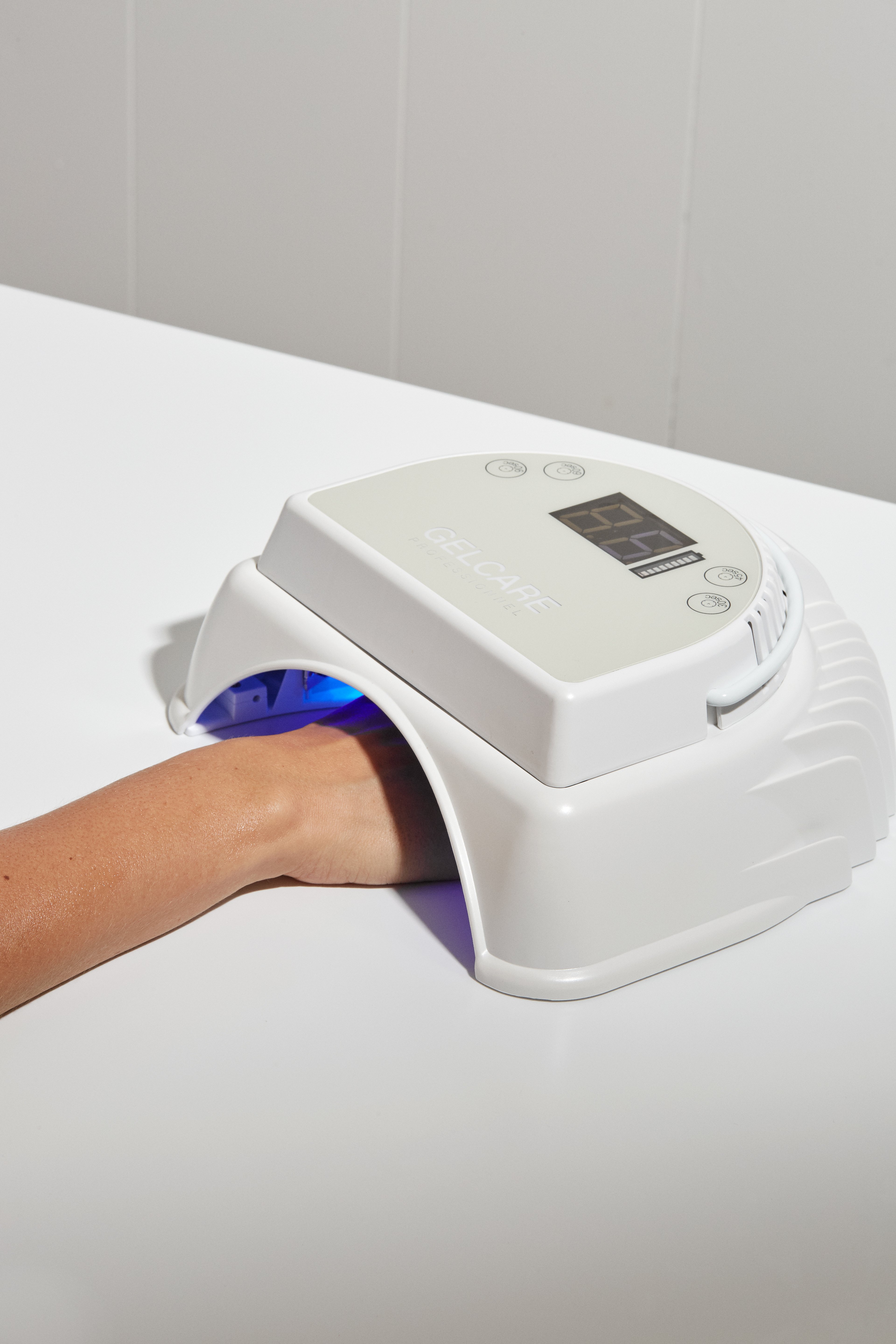
Modern gel polish systems are designed for LED lamps: they cure a coat in a fraction of the time of older UV tube lamps, their diodes keep full strength for years instead of fading, and they emit a narrower band of light targeted at the photoinitiators in the gel. Older-style UV lamps still work with compatible formulas, but there is little reason to choose one today. The lamp that matters is the one matched to your gel system — GELCARE colours, base and top are formulated for our LED lamps.
How does a nail lamp cure gel?
Gel polish stays liquid in the bottle because nothing has triggered its photoinitiators — molecules that absorb light at specific wavelengths and kick off the reaction that links the resin into a hard, glossy network. Put the coat under the right light for the right time and it polymerizes through its full depth. Wrong wavelength, weak output, or a shortened timer and the bottom of the layer stays soft: the manicure feels fine today and peels in three days.
What is the real difference between LED and UV lamps?
- Speed: LED lamps cure compatible gels several times faster than fluorescent UV tube lamps
- Consistency: LED diodes hold their intensity for years; UV tubes weaken gradually and quietly undercure long before they die
- Both emit UV-range light — 'LED' nail lamps work in the UVA range too, just narrower and more targeted
- Compatibility is what matters: a gel formulated for LED cures perfectly under its intended LED lamp
Are nail lamps safe for skin?
Nail lamp exposure is brief and localized, and the consensus from dermatology bodies is that the risk from normal manicure use is low. If you want extra precaution, two easy habits cover it: apply a broad-spectrum sunscreen to your hands 20 minutes before your manicure, or wear fingerless UV gloves during curing. Avoiding skin contact with uncured gel — which is a matter of careful application, not the lamp — is the more important habit, since uncured resins are what can trigger sensitivities. This is also why formulation standards matter: every GELCARE shade is 10-free and TPO-free.
What should I look for in a nail lamp?
- System match first: use the lamp your gel brand designed and tested its cure times with
- Even coverage: diodes placed to reach thumbs and side walls without repositioning
- Preset timers so every coat gets a consistent, complete cure
- A comfortable hand position — a full hand should rest flat without touching the housing
Both the Gelcare LED Lamp in the Starter Kit and the larger Pro LED Lamp are matched to our formulas, with preset timers for base, colour and top.
Signs your lamp is undercuring your gel
- Manicures that peel in one satisfying piece after a few days — the classic sign of soft, undercured layers underneath
- A surface that dents under a fingernail press after curing
- Colour that stays tacky beyond the normal inhibition layer
- Wrinkling during cure — usually a too-thick coat, but a weak lamp makes it worse
If these sound familiar and your coats are thin, replace the lamp before blaming the polish — with old UV tube lamps especially, output fades years before the light stops turning on.
Frequently asked questions
Can I cure GELCARE polish under any lamp?
Our formulas are designed and tested with our LED lamps; a different LED lamp of similar output will generally work, but cure times are only guaranteed with the matched system.
Can gel polish dry without a lamp?
No — gel only hardens under curing light. If you want polish that dries in air, that is exactly what our lamp-free nail polish line is for.
Do LED lamps damage nails?
No. The lamp only interacts with the gel. Nail damage comes from rough filing or peeling gel off — see our removal guide for the safe method.